


- 2258
- 0
Sharing Ideas and Updates on LPG in Nigeria and related information to enable effective collaboration within the LPG Value Chain

LPG Supply Chain Instability In Nigeria: Why We Keep Experiencing Scarcity And How To Fix It
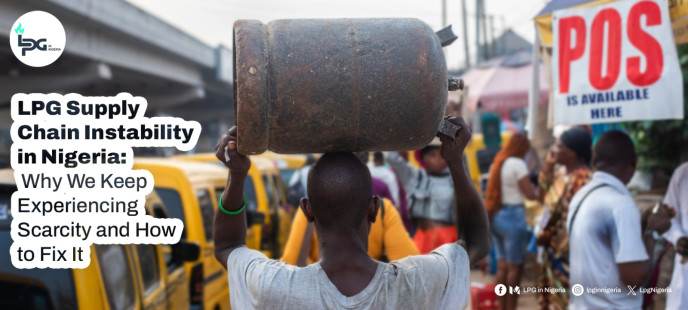
LPG Supply Chain Instability In Nigeria: Why We Keep Experiencing Scarcity And How To Fix It

Liquefied Petroleum Gas (LPG), popularly known as cooking gas, has become a household essential for millions of Nigerians. Yet, despite the country’s status as a major gas producer, the domestic LPG market remains highly unstable. In recent months, Nigerians have faced price spikes, product shortages, inconsistent deliveries, and terminal congestion, all of which reveal deep systemic issues within the supply chain. This blog examines the root causes of recurring LPG scarcity in Nigeria, from refinery disruptions to off-taker behaviour, and proposes industry-backed solutions for long-term stability.
✅ 1. Why LPG Shortages Keep Recurring in Nigeria
Nigeria’s LPG scarcity is not caused by a single factor, it is the result of interconnected weaknesses across production, distribution, funding, and market regulation.
1.1 Dangote Refinery Shutdowns & Production Gaps
The Dangote Refinery, now a major player in Nigeria’s energy landscape, has had multiple operational interruptions, including the temporary shutdown of its fluid catalytic cracking unit (FCCU) in September 2025.
These shutdowns reduce the domestic supply of LPG and other refined products. Since the refinery is expected to play a dominant role in the market, any disruption creates:
Supply gaps
Increased import pressure
Speculative pricing
Distribution delays
Although operations later resumed, the refinery’s inconsistency remains one of the triggers for temporary LPG shortages.
1.2 NLNG’s Limited Domestic Supply
Nigeria LNG (NLNG) remains the single largest supplier of LPG to the domestic market. However, its supply is limited due to:
Existing long-term export contracts
Production fluctuations
Feedgas supply constraints
Plant maintenance cycles
According to NLNG, only about 450,000–500,000 metric tonnes of LPG is supplied annually to Nigeria, far below national demand that now exceeds 1.5 million MT.
This structural supply deficit means imports are inevitable, and whenever foreign markets tighten or forex becomes unstable, scarcity follows.
1.3 Terminal Congestion & Infrastructure Bottlenecks
Many LPG terminals in Lagos lack the storage capacity, truck-loading capacity, and dredging depth to handle rising demand.
Key bottlenecks include:
Limited jetty access
Inadequate storage tanks
Slow truck-loading operations
Long vessel turnaround times
Operational downtimes at Apapa and Kirikiri terminals
When vessels cannot berth or discharge on time, the entire downstream market feels the pressure.
✅ 2. Market Behaviours That Worsen Scarcity
Beyond infrastructure problems, human behaviour within the supply chain contributes significantly to price spikes and shortages.
2.1 Off-Taker Hoarding & Speculative Buying
When prices begin to rise, off-takers, plant owners, terminal operators, and distributors tend to engage in:
Bulk buying and hoarding
Holding stock to wait for higher market prices
Delayed selling as a form of speculation
This behaviour amplifies scarcity and leads to artificial price surges, a pattern repeatedly observed in Nigeria’s LPG market.
2.2 Price Markups at Each Distribution Stage
Because LPG moves through several layers:
Importers / producers
Terminal operators
Bridging and trucking companies
LPG plants
Retailers
Each level adds margins, which become even higher during scarcity. When terminal prices jump, retail prices follow instantly.
2.3 Forex Pressures and Import Dependence
Despite being gas-rich, Nigeria still imports over 60% of its LPG. Because these imports are priced in dollars:
Forex shortages
Naira devaluation
High exchange premiums
All translate into higher LPG retail prices even when there is no real supply shortage.
✅ 3. Why This Matters Now
Households and businesses across Nigeria are experiencing:
Severe price increases (₦1,000–₦2,500 per kg depending on location)
Plant shutdowns due to stockouts
Long queues at filling stations
Supply uncertainty for industrial users
Given Nigeria’s push for clean cooking and the health risks of biomass LPG scarcity undermines national and global sustainability goals.
✅ 4. How to Stabilise Nigeria’s LPG Supply Chain: Industry-Backed Solutions
4.1 Expand Domestic Production
Nigeria must reduce reliance on imports. This requires:
Increased NLNG domestic allocation
Accelerated Dangote refinery optimisation
Incentives for other modular refineries to produce LPG
A more diversified production base will reduce vulnerability.
4.2 Upgrade LPG Storage & Terminal Infrastructure
Government and private sector should invest in:
Larger coastal storage terminals (5,000–20,000 MT tanks)
Additional loading bays for trucks
Modern jetties capable of handling multiple vessels
Fast-loading digitalised systems
Improved infrastructure reduces congestion and supply delays.
4.3 Implement the Cylinder Recirculation Model (CRM) Nationwide
CRM has been successful in Côte d’Ivoire, Ghana, and India.
Benefits include:
Reduced accidents
Increased safety compliance
Faster turnaround of filled cylinders
Encouraged investment in cylinders by marketers
Nigeria has attempted CRM before but must now implement it fully.
4.4 Establish a Predictable Pricing Framework
Rather than letting market speculation drive prices, Nigeria needs:
Transparent price monitoring
A price-calculation template guided by PPPRA/Downstream Commission
Publication of weekly terminal prices
Anti-hoarding regulations
Predictability encourages stability.
4.5 Improve Transportation & Logistics
Investments needed include:
LPG trucks with GPS tracking
Pipeline-based transport (long-term)
Dedicated coastal shuttle vessels
Transport efficiency affects final retail price.
4.6 Leverage Government Policies & Subsidies
Subsidies do not need to be blanket they can be targeted:
Subsidise cylinder acquisition for low-income households
Tax waivers on LPG equipment
Reduced tariffs on imported LPG until domestic supply stabilises
Côte d’Ivoire's 50% LPG cylinder subsidy model is a notable success story.
✅ Conclusion
LPG scarcity in Nigeria is the result of systemic supply chain weaknesses from production shortfalls to terminal inefficiencies, speculative behaviours, and infrastructural gaps. While Dangote Refinery and NLNG remain key players, long-term stability requires coordinated action, including:
Infrastructure upgrades
Predictable pricing
Transparent supply allocation
Government-backed reforms
Increased domestic production
As Nigeria pushes toward clean energy adoption, stabilising the LPG supply chain is not optional, it is critical for national health, economic well-being, and sustainable development.
Share on Social Media:
Are you setting up, or do you need LPG information? Get started with our LPG and CNG Webinars!
Do you need LPG Depot Prices and Mont Belvieu Prices Data Sheet (2019 till date)? Get Access here!
You May Also Like




0 Comment.