


- 14
- 0
Sharing Ideas and Updates on LPG in Nigeria and related information to enable effective collaboration within the LPG Value Chain

LPG Safety In Nigeria: Between Policy Ambition And Market Reality
LPG Safety In Nigeria: Between Policy Ambition And Market Reality

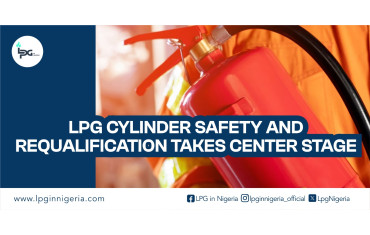
Nigeria’s LPG sector is expanding at an unprecedented pace, driven by the national push for cleaner energy under the Decade of Gas initiative. The recent webinar hosted by the Major Energies Marketers Association of Nigeria on LPG Cylinder Safety and Requalification brought this growth into sharp focus. It also revealed a more complex reality. While policy ambition is strong, the operational systems required to sustain safe growth remain under pressure. The webinar gathered key stakeholders across the LPG value chain, including regulators, manufacturers, marketers, and consumer advocates. The objective was clear. To strengthen awareness around cylinder safety and requalification while addressing systemic risks that continue to undermine safety across the market.
At a policy level, the direction appears well defined. Nigeria is leveraging its vast gas resources to drive clean cooking adoption, reduce reliance on biomass, and improve environmental outcomes. LPG consumption has risen significantly over the years, and government programs are actively supporting wider distribution of cylinders and infrastructure development. However, as the market expands, the pressure on safety systems is intensifying.
Representatives from the Nigerian Midstream and Downstream Petroleum Regulatory Authority emphasized the importance of enforcement and accountability. The regulator acknowledged that ensuring cylinder safety requires stronger surveillance and closer collaboration with stakeholders such as the Standards Organisation of Nigeria, which is responsible for setting and enforcing technical standards. SON’s role in certifying cylinders and overseeing requalification every five years reflects a structured approach to safety. Cylinders are expected to undergo inspection processes that assess structural integrity, detect corrosion, and verify pressure resistance. In theory, this system provides a robust safeguard against accidents.
In practice, however, several gaps persist.
One of the most critical issues highlighted during the webinar is the widespread circulation of substandard and expired cylinders. Informal market practices such as illegal refilling, repainting of old cylinders, and unauthorized decanting operations continue to thrive. These practices are not simply isolated violations. They represent a parallel system operating alongside the formal LPG market.
This dual market structure raises serious concerns about the effectiveness of enforcement mechanisms. If substandard cylinders can easily re-enter circulation, then compliance frameworks are being undermined at a fundamental level. Consumer awareness also remains uneven. While technical guidelines exist for identifying certified cylinders, many end users lack the knowledge or tools to make informed decisions. For households that rely on LPG for daily cooking, this creates a hidden risk. Safety becomes dependent not on regulation alone, but on individual vigilance.
Insights from Women in LPG reinforced this concern. Women, who are often the primary users of LPG in households, frequently cannot determine whether their cylinders are safe or expired. This disconnect between policy standards and everyday experience highlights a key limitation of awareness campaigns. Information does not always translate into action, especially in markets where economic pressures influence purchasing decisions. Another structural challenge lies in Nigeria’s cylinder ownership model. Unlike markets where companies retain ownership of cylinders, Nigeria operates largely on a consumer ownership basis. This means that once a cylinder enters the market, its maintenance and lifecycle management become fragmented.
Industry stakeholders pointed out that this model complicates traceability. Marketers cannot fully control the quality of cylinders brought in for refilling. Regulators face difficulties tracking cylinder history and usage patterns. As a result, accountability becomes diffused across multiple actors. Proposals to transition toward a marketer owned exchange model were discussed as a potential solution. Under such a system, companies would retain ownership of cylinders and consumers would exchange empty cylinders for filled ones. This approach could improve monitoring and standardization. However, this transition is not without challenges. It would require significant investment, changes in business operations, and strong regulatory support. There is also the question of consumer acceptance. In a price-sensitive market, any shift that increases costs or alters usage patterns may face resistance. Beyond structural issues, the scale of future demand introduces additional complexity. With projections suggesting that Nigeria may require up to 90 million cylinders to meet growing LPG demand, the capacity for requalification, inspection, and enforcement will need to expand significantly. This raises an important question. Is the current system designed to handle such scale?
The answer, based on discussions from the webinar, appears uncertain.
While regulatory frameworks and technical standards are in place, their effectiveness depends on consistent enforcement, industry compliance, and consumer participation. Any weakness in these areas can create vulnerabilities that scale alongside market growth. A critical perspective emerging from the discussion is that Nigeria’s LPG safety challenge is not purely technical. It is deeply systemic. It involves regulatory capacity, market structure, economic incentives, and behavioral factors. Addressing these challenges will require more than incremental improvements. It will demand a coordinated approach that aligns policy, industry practices, and consumer behavior. Technology may offer part of the solution. Digital tracking systems, smart monitoring devices, and automated distribution platforms have the potential to improve traceability and reduce human error. However, technology alone cannot resolve underlying structural issues such as informal market activity or weak enforcement. Ultimately, the success of Nigeria’s LPG expansion will depend on whether safety can be embedded into the system at every level. From manufacturing and distribution to household usage and requalification, each stage must function effectively and cohesively.
The MEMAN webinar served as an important reminder that growth without safety is unsustainable. Nigeria’s ambition to expand LPG adoption is both necessary and commendable. The challenge now lies in ensuring that this growth is supported by systems that are resilient, inclusive, and capable of protecting the millions of Nigerians who rely on LPG every day.
Share on Social Media:
Are you setting up, or do you need LPG information? Get started with our LPG and CNG Webinars!
Do you need LPG Depot Prices and Mont Belvieu Prices Data Sheet (2019 till date)? Get Access here!
You May Also Like



0 Comment.