


- 11
- 0
Sharing Ideas and Updates on LPG in Nigeria and related information to enable effective collaboration within the LPG Value Chain


Nigeria Strengthens Its Carbon Market With First Letter Of Authorisation
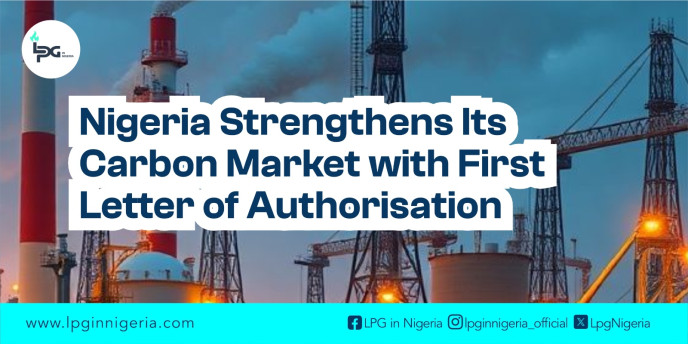
Nigeria Strengthens Its Carbon Market With First Letter Of Authorisation

Nigeria has taken a decisive step in advancing its climate agenda with the issuance of its first Letter of Authorisation under Article 6 of the Paris Agreement. The milestone, delivered through the National Council on Climate Change, enables the generation of 5.2 million carbon credits from clean cooking projects across the country. This development positions Nigeria more firmly within the global carbon market while signaling a growing commitment to sustainable development, emissions reduction, and energy transition.
A Turning Point for Nigeria’s Climate Strategy
The issuance of a Letter of Authorisation is not merely a procedural step. It represents a formal approval by a national government allowing carbon credits generated within its borders to be traded internationally under Article 6 of the Paris Agreement. For Nigeria, this marks the beginning of a more structured and credible participation in global carbon markets. Clean cooking projects were selected as the foundation for this first issuance, reflecting both environmental and social priorities. These projects aim to replace traditional cooking methods that rely on firewood and biomass with cleaner energy alternatives such as LPG and other low-emission fuels. The expected outcomes are significant. Reduced greenhouse gas emissions, improved indoor air quality, and decreased pressure on forests are among the immediate benefits. At the same time, the initiative is expected to stimulate local manufacturing and create economic opportunities within the clean energy value chain.
Economic Opportunities and Market Potential
The activation of carbon credits at this scale introduces new financial pathways for Nigeria’s energy transition. Carbon markets allow countries and project developers to monetize emissions reductions, creating an incentive structure that aligns environmental goals with economic returns. Through frameworks such as the Nigeria Carbon Market Activation Policy, Nigeria is working to establish a regulated environment that can attract both local and international investors.
The potential impact is substantial. By creating a pipeline of verified carbon projects, Nigeria can unlock:
Increased foreign direct investment in clean energy
New revenue streams for project developers
Expanded access to climate finance
Growth in green technology and innovation
In this context, the 5.2 million carbon credits represent more than an environmental metric. They signal the emergence of a new asset class within Nigeria’s economy.
Clean Cooking as a Climate and Social Priority
The focus on clean cooking is particularly strategic. Millions of Nigerian households still rely on traditional fuels, which contribute to deforestation, carbon emissions, and serious health risks due to indoor air pollution. By linking clean cooking initiatives to carbon markets, Nigeria is effectively creating a model where climate action directly improves everyday living conditions. This approach also aligns with Nigeria’s broader energy transition goals, including expanding LPG adoption and reducing reliance on biomass. In doing so, it connects climate policy with public health, gender inclusion, and rural development.
Critical Perspective: Opportunities and Structural Challenges
While this milestone is significant, it also raises important questions about execution and long-term sustainability. One key challenge lies in measurement and verification. Carbon markets depend on accurate data to ensure that emissions reductions are real and not overstated. Nigeria will need strong monitoring systems to maintain credibility in international markets. Another issue is equitable distribution of benefits. Carbon finance can sometimes concentrate value among developers and intermediaries, with limited impact at the community level. Ensuring that households adopting clean cooking solutions experience real economic and social benefits will be critical. There is also the question of market stability. Global carbon markets are still evolving, with price fluctuations and regulatory uncertainties. Nigeria’s success will depend on how well it navigates these external dynamics while building a resilient domestic framework. Additionally, the integration of carbon market mechanisms into Nigeria’s existing energy systems may require institutional coordination that has historically been difficult to achieve. Aligning regulators, project developers, and financial stakeholders will be essential for scaling beyond initial successes.
Positioning Nigeria in Africa’s Climate Leadership
Despite these challenges, the issuance of the first Letter of Authorisation represents a strong signal of intent. It demonstrates that Nigeria is not only participating in global climate conversations but is actively shaping its role within them. By aligning with international frameworks and developing domestic policies such as NCMAP, Nigeria is positioning itself as a potential leader in Africa’s carbon market landscape. This leadership role carries both opportunity and responsibility. Success could establish Nigeria as a hub for climate finance and innovation. Failure to address structural gaps could limit the impact of otherwise promising initiatives.
Nigeria’s entry into the Article 6 carbon market marks a defining moment in its climate journey. The issuance of 5.2 million carbon credits from clean cooking projects reflects a convergence of environmental ambition, economic opportunity, and social impact. However, the true test lies ahead. Translating policy into measurable outcomes, ensuring transparency, and delivering tangible benefits to citizens will determine whether this milestone becomes a foundation for long-term success or a symbolic first step. As global attention increasingly turns toward climate action, Nigeria’s approach offers a case study in how emerging economies can leverage carbon markets to drive both sustainability and development.
What if Gas Sales Could Also Earn You Carbon Credits?
VCRM and Carbon Credits are Here
Through the VCRM platform, vendors can participate in Carbon credit financing backed by the Kyoto Protocol and the Paris Agreement, a legally binding international treaty on climate change adopted on December 12, 2015, at the UN Climate Change Conference (COP21) in Paris.
Do you know that every verified switch to GAS/LPG reduces CO₂ emissions in the environment? And that reduction has financial value.
The VCRM leverages carbon trading to:
✔ Finance cylinder acquisition
✔ Support maintenance
✔ Drive expansion of the GAS/LPG Industry.
This is beyond retail profit.
To join the winning team in the GAS Business, click on this link and get registered. https://bit.ly/4sgIpnV
Joining is FREE. Share the post, and let's get gas usage expanded in Nigeria.
Share on Social Media:
Are you setting up, or do you need LPG information? Get started with our LPG and CNG Webinars!
Do you need LPG Depot Prices and Mont Belvieu Prices Data Sheet (2019 till date)? Get Access here!
You May Also Like




0 Comment.