


- 23
- 0
Sharing Ideas and Updates on LPG in Nigeria and related information to enable effective collaboration within the LPG Value Chain

NMDPRA Cracks Down On Unsafe LPG Practices: What Retailers Need To Know
NMDPRA Cracks Down On Unsafe LPG Practices: What Retailers Need To Know

Nigeria’s gas sector continues to expand as part of the Federal Government’s broader energy transition goals, but safety concerns remain a critical issue. Recently, the Nigerian Midstream and Downstream Petroleum Regulatory Authority (NMDPRA) issued a strong warning to Liquefied Petroleum Gas (LPG) retailers in Ogun State, stressing that operators who violate safety regulations, particularly through illegal decanting practices, will face strict sanctions. This development highlights the growing tension between rapid sector expansion and the need to maintain high safety standards across the LPG value chain.
At a stakeholders’ engagement held in Abeokuta, the Ogun State Coordinator of NMDPRA, Akinyemi Atilola, emphasized the important role LPG retailers play in achieving Nigeria’s gas deepening agenda. According to him, retailers serve as the final link between suppliers and consumers, making their operations essential to the success of the government’s drive to increase gas utilisation. However, he made it clear that this responsibility must be carried out in strict compliance with established safety standards and global best practices.
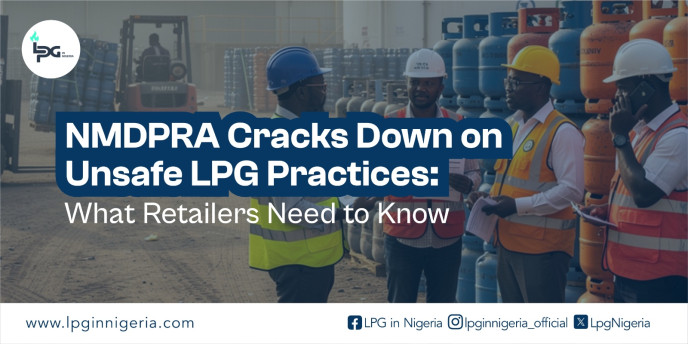
A major concern raised during the engagement was the increasing prevalence of illegal decanting among LPG retailers. Decanting refers to the transfer of gas from one cylinder to another, a practice that is not permitted for operators classified under Category D. These operators are only authorised to run a cylinder exchange system, commonly known as the drop-and-pick model, where customers bring empty cylinders and receive pre-filled ones in return. Despite this clear guideline, many retailers have deviated from the approved model and continue to engage in decanting.
The regulator described this practice as highly dangerous, noting that it exposes both operators and the public to serious risks. Improper handling of gas during decanting can result in overfilled cylinders, gas leaks, fire outbreaks, and even explosions. Such incidents can have devastating consequences, particularly in densely populated areas where many of these businesses operate. As a result, the NMDPRA has made it clear that any deviation from approved operational standards constitutes a serious safety breach.
In response to these violations, the authority has announced plans to intensify enforcement measures. This includes sealing non-compliant outlets and imposing sanctions on erring operators. The regulator revealed that about five LPG outlets were shut down in Ogun State in the previous year due to safety violations, and it signalled that more closures could occur if operators fail to comply with regulations. With over 600 LPG operators in the state, ensuring compliance remains a significant challenge that requires both strict oversight and cooperation from industry participants.
While the NMDPRA maintains a firm stance on enforcement, it also recognises the economic importance of the LPG retail sector. Many individuals depend on this business for their livelihoods, and the authority has stated that its goal is not to disrupt legitimate businesses but to ensure that operations are conducted safely. Operators who adhere to the rules will be supported and licensed accordingly, while those who engage in unsafe practices will not receive approval to operate.
In addition to addressing decanting, the regulator also raised concerns about the improper siting and storage of LPG facilities. It outlined specific safety requirements, including the need for adequate space, proper ventilation, and strict limits on the quantity of gas that can be stored. The authority also prohibited the operation of LPG businesses within residential buildings and condemned unsafe storage practices such as keeping gas cylinders inside homes or near sensitive locations like schools and hospitals. These measures are intended to reduce the risk of accidents and protect both operators and the general public.
Industry stakeholders have responded positively to the regulator’s efforts, acknowledging the importance of maintaining safety standards in a rapidly growing sector. Representatives from the Nigeria Union of Petroleum and Natural Gas Workers and the Nigeria Association of Liquefied Petroleum Gas Marketers commended the NMDPRA for its support and called for increased collaboration. They emphasised the need for continuous training and awareness programmes to help operators understand and comply with safety regulations. A joint communiqué issued at the end of the engagement reinforced the collective responsibility of all stakeholders to promote safety and ensure that violators are held accountable.
This enforcement drive forms part of the Federal Government’s broader “Decade of Gas” initiative, which aims to expand the use of gas across Nigeria. While this initiative presents significant opportunities for economic growth and improved energy access, it also requires a strong regulatory framework to ensure that expansion does not come at the expense of safety. The actions taken by the NMDPRA demonstrate a commitment to balancing these priorities by promoting growth while enforcing strict compliance with safety standards.
In conclusion, the crackdown on illegal LPG practices in Ogun State underscores the importance of safety in Nigeria’s gas sector. As demand for LPG continues to rise, maintaining proper operational standards will be essential to preventing accidents and ensuring sustainable growth. The NMDPRA’s warning serves as a reminder that compliance is not optional but a fundamental requirement for all operators. By enforcing regulations and encouraging collaboration within the industry, the authority aims to create a safer and more reliable LPG market that benefits both businesses and consumers.
Share on Social Media:
Are you setting up, or do you need LPG information? Get started with our LPG and CNG Webinars!
Do you need LPG Depot Prices and Mont Belvieu Prices Data Sheet (2019 till date)? Get Access here!
You May Also Like

0 Comment.