

- 15
- 0
Sharing Ideas and Updates on LPG in Nigeria and related information to enable effective collaboration within the LPG Value Chain

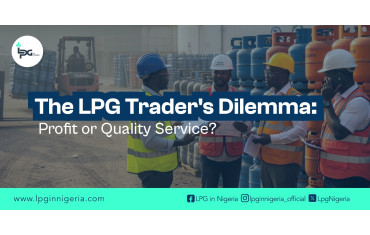
The LPG Trader’s Dilemma: Profit Or Quality Service?
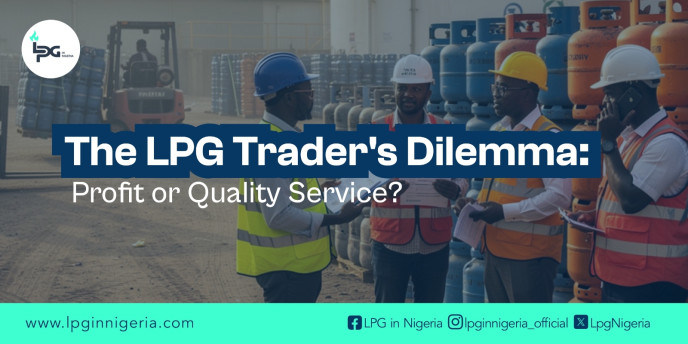
The LPG Trader’s Dilemma: Profit Or Quality Service?

In the downstream gas business, every decision carries weight. Margins matter. Relationships matter even more. For LPG traders operating in Nigeria’s competitive and sometimes unpredictable supply environment, a recurring question persists:
Do you chase higher margins or protect long-term customer trust?
This is not just a theoretical debate. It is a real, daily operational challenge.
Across supply hubs like Dangote Refinery and the Apapa axis in Lagos, traders often weigh price advantages against logistics certainty. A difference of ₦35,000 per metric tonne may look like smart business on paper. But what happens when that decision affects delivery timelines?
Below is a real-life experience shared by a member of our platform:
A Trader’s Experience
“On Sunday the 15th of February I got an order for 10MT from my customer. He needed it for the manufacture of certain products that use LPG as a feedstock. I had two options to source from, first Dangote which was about ₦35,000/MT cheaper than other sources in Apapa. My Apapa source had a ready truck but higher product cost. I decided to go for Dangote Refinery to benefit from the full profit over the Apapa source. To my dismay, a product I was supposed to load on Monday is now being delayed for four days due to a faulty truck. I could lose my customer after this delayed delivery if I don’t manage the situation properly. So what do I do next time? I guess I would stick with my reliable but more expensive product source to keep my revenue source steady.”
The Hidden Cost of Chasing Margin
At ₦35,000 per MT, the potential additional profit on a 10MT order would be ₦350,000, a significant margin in a competitive LPG trading environment.
But what is the cost of:
Losing a long-term industrial customer?
Damaging your reliability reputation?
Disrupting a manufacturer’s production schedule?
Being perceived as inconsistent in supply?
In the LPG ecosystem, especially where the product is used as industrial feedstock, timing is not flexible. Production lines depend on delivery schedules. A delay is not just an inconvenience, it can halt operations. When a trader chooses a cheaper source without factoring in logistics reliability, truck availability, and turnaround certainty, the “extra profit” can quickly transform into reputational risk.
The Strategic Question
This situation presents a powerful business lesson:
Short-term profit maximisation
vs.
Long-term revenue sustainability
Reliable customers are recurring revenue streams. Once trust is broken, recovery can be difficult, especially in industrial supply chains where alternative traders are always available.
A dependable but slightly more expensive source may protect:
Customer retention
Brand credibility
Stable cash flow
Long-term contracts
In contrast, aggressive margin pursuit without risk buffers may expose traders to operational vulnerability.
Risk Management in LPG Trading
Experienced traders often build hybrid sourcing strategies:
Maintain a primary reliable source for guaranteed orders.
Use lower-cost options only when logistics certainty is confirmed.
Factor “delay risk” into pricing models.
Maintain emergency backup suppliers.
Communicate proactively with customers when disruptions occur.
In volatile supply environments, reliability often becomes a competitive advantage.
So What Is the Right Decision?
There is no universal answer. Every trader operates under different capital constraints, supplier relationships, and customer expectations.
But one principle remains clear:
In the energy business, trust compounds faster than profit margins.
A ₦350,000 margin may feel rewarding today.
A retained industrial client may be worth millions over time.
We Want to Hear From You
Have you faced a similar dilemma in LPG trading or downstream supply?
Have you chosen profit and regretted it?
Have you sacrificed margin to protect a customer relationship?
How do you manage supply risk in Nigeria’s LPG ecosystem?
Our platform exists to share real industry experiences and practical lessons.
Users and followers are encouraged to send in their stories and insights. Your experience may help another trader avoid costly mistakes.
Because sometimes, the biggest decision in business is not about price, it is about reputation.
- Lpg
- cooking gas
- lpg trader
- lpg retailer
- lpg marketers
- lpg in nigeria
- lpg business
- lpg profit
- lpg losses
Share on Social Media:
Are you setting up, or do you need LPG information? Get started with our LPG and CNG Webinars!
Do you need LPG Depot Prices and Mont Belvieu Prices Data Sheet (2019 till date)? Get Access here!
You May Also Like



0 Comment.