


- 1148
- 0
Sharing Ideas and Updates on LPG in Nigeria and related information to enable effective collaboration within the LPG Value Chain


Why More Drivers Are Still Converting Their Cars To LPG Even In 2026
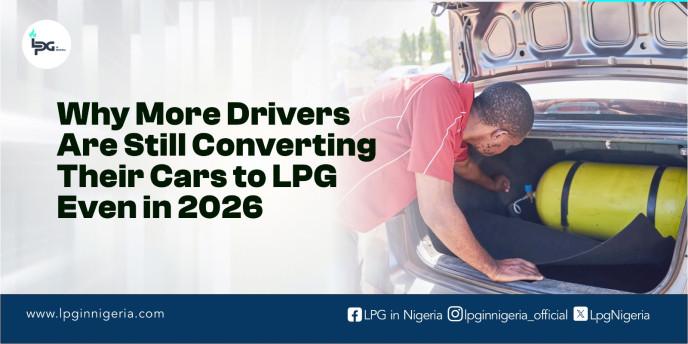
Why More Drivers Are Still Converting Their Cars To LPG Even In 2026

Every time the global auto industry starts talking about “the future,” the spotlight usually lands on shiny new technologies. Electric vehicles. Hydrogen. Synthetic fuels. Each comes with bold promises and even bolder timelines. But while those conversations dominate headlines, something far less dramatic keeps happening quietly in the background: people all over the world are still converting their vehicles to run on LPG, also known as propane Autogas. That persistence is worth paying attention to, especially when you realise that LPG is not a fringe option. It is, in fact, the third-most widely used engine fuel in the world, after petrol and diesel.
A quick background: why LPG never really went away
Globally, LPG has been used as an automotive fuel for decades. Long before today’s EV debates, LPG-powered vehicles were already common in parts of Europe, Asia, and North America, especially for taxis, buses, delivery fleets, forklifts, and municipal vehicles. The appeal has always been practical rather than fashionable. LPG works with internal combustion engines, meaning existing vehicles can be converted instead of replaced. It is widely available because it is produced as a byproduct of crude oil refining and natural gas processing. No one drills specifically for LPG, it is captured, processed, and put to use.
Despite getting far less media attention than newer alternatives, LPG quietly became a global staple. That’s how it earned its place as the world’s “best of the rest” behind petrol and diesel. Performance, cost, and why drivers keep choosing it. One of the most misunderstood aspects of LPG is performance. Many assume it’s a compromise fuel, but chemically, LPG has a very high octane rating, often higher than premium petrol. High octane means better resistance to engine knock, which is particularly valuable for turbocharged and high-compression engines. LPG also burns colder than petrol, helping to keep intake temperatures down. This can be an advantage for engine longevity and performance, especially under heavy load or in hot climates. Cost is another major factor. In many markets, LPG is significantly cheaper than petrol or specialty fuels. While a litre of LPG contains less energy than petrol, meaning fuel economy can be slightly lower, the overall running cost often still comes out cheaper. For high-mileage drivers, fleets, and commercial users, those savings add up quickly.
The environmental angle: cleaner, not perfect, but better
LPG’s staying power isn’t just about money or mechanics. It also burns cleaner than petrol and diesel. Its molecular structure is simpler, producing fewer particulates and lower emissions of harmful pollutants. This doesn’t make LPG a zero-emissions fuel, but it does make it a lower-emission option within the internal combustion engine family. That distinction matters in a world where the transition away from fossil fuels will be gradual, uneven, and deeply influenced by local realities.
Bringing the conversation home: Africa’s energy reality
This global background is important because Africa’s transport challenges are very different from those of Europe or North America. The continent relies heavily on used vehicles, long vehicle lifespans, and limited charging or alternative fuel infrastructure. For most African countries, the immediate challenge is not replacing cars; it’s making existing transport cleaner, cheaper, and more reliable. That context makes LPG especially relevant. It doesn’t demand a complete overhaul of infrastructure. It works with current engines. It can be rolled out incrementally, city by city, fleet by fleet. Across parts of North and East Africa, LPG and CNG conversions are already part of the transport mix, particularly for taxis and commercial vehicles. The logic is simple: lower fuel costs, reduced emissions, and fewer engine-related issues over time.
Nigeria: A gas-rich country finding its footing
In Nigeria, the LPG Autogas conversation is gaining momentum against a unique backdrop. The country is rich in natural gas, yet historically dependent on petrol and diesel for transportation. Rising fuel costs, subsidy reforms, and urban air quality concerns are forcing a rethink. LPG fits neatly into Nigeria’s evolving energy narrative. It is already produced locally as part of refining and gas processing. Policy discussions increasingly frame gas, not just oil, as the bridge fuel for industrialisation and cleaner energy use. Autogas is a natural extension of that thinking. For commercial fleets, ride-hailing vehicles, logistics operators, and high-mileage drivers, LPG conversion is less about environmental ideology and more about economic survival and operational efficiency. Lower fuel costs, reduced maintenance issues, and alignment with national gas utilisation goals make it a compelling option.
Our perspective: Why LPG still matters for Nigeria’s transport future
From where we stand in the Nigerian LPG space, the continued global relevance of autogas is not surprising; it’s instructive. It shows that energy transitions don’t happen in leaps; they happen in layers. LPG is not competing with EVs or hydrogen for the distant future. It is solving today’s problems: fuel affordability, cleaner air, and better use of domestic energy resources. For Nigeria, that matters. As infrastructure improves and gas policy shifts from ambition to execution, LPG has a real opportunity to play a bigger role in transportation, especially as a practical, transitional fuel. It may never dominate headlines, but its quiet consistency could make it one of the most impactful energy choices on Nigerian roads in the years ahead.
Source: WLGA NewsLetter.
Share on Social Media:
Are you setting up, or do you need LPG information? Get started with our LPG and CNG Webinars!
Do you need LPG Depot Prices and Mont Belvieu Prices Data Sheet (2019 till date)? Get Access here!
You May Also Like



0 Comment.