


- 5
- 0
Sharing Ideas and Updates on LPG in Nigeria and related information to enable effective collaboration within the LPG Value Chain


Nigeria Raises Gas Prices For Power Generation: What It Means For Electricity And Subsidies
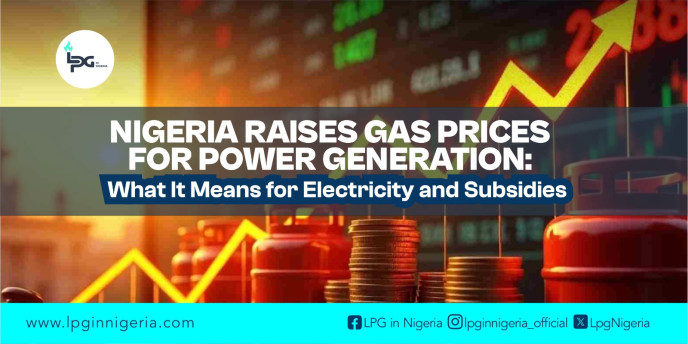
Nigeria Raises Gas Prices For Power Generation: What It Means For Electricity And Subsidies

Nigeria’s energy landscape is once again in focus as the Nigerian Midstream and Downstream Petroleum Regulatory Authority (NMDPRA) announces a fresh increase in the price of natural gas for power generation companies. While the adjustment may appear modest on the surface, its ripple effects could be significant for electricity costs, government subsidies, and the broader power sector.
A New Gas Price Takes Effect
Effective April 1, 2026, the NMDPRA raised the domestic base price of natural gas for electricity generation to $2.18 per million British thermal units (MMBtu). This marks a slight increase from the 2025 rate of $2.13/MMBtu, just a five-cent rise, or about 2.35%. The announcement, signed by the authority’s Chief Executive, reflects an ongoing effort to align Nigeria’s gas pricing with market realities, as well as provisions of the Petroleum Industry Act (PIA). But even a marginal increase like this carries weight in a sector already grappling with deep structural challenges.
Why This Matters for Nigeria’s Power Sector
Nigeria depends heavily on gas-fired power plants, with over 75% of electricity generation fueled by natural gas. This means any adjustment in gas pricing directly impacts the cost of generating electricity, and by extension, the financial burden on the government. Currently, electricity tariffs in Nigeria remain below cost-reflective levels for many consumers. To bridge this gap, the Federal Government subsidizes power generation costs. However, the numbers reveal a growing strain:
In 2025, the government owed ₦1.92 trillion in electricity subsidies
Only ₦71.49 billion (3.7%) of that amount was paid
With gas prices now rising, subsidy obligations are expected to increase further—unless there is a significant policy shift.
A Delicate Balancing Act
According to the NMDPRA, the revised pricing structure aims to achieve two key goals:
Ensure sufficient gas supply to the domestic market
Maintain investor confidence in Nigeria’s energy sector
Beyond power generation, the new pricing framework also affects other sectors:
Commercial users will pay $2.68/MMBtu
Gas-based industries (like fertilizer and petrochemicals) will operate within a flexible pricing system, with a floor price of $0.90/MMBtu. The regulator insists that this structure is designed to promote competitiveness while guaranteeing supply. However, industry stakeholders are cautious.
The Bigger Problem: Liquidity and Supply Constraints
The price increase comes at a time when Nigeria’s power sector is already under pressure from:
Mounting debts
Poor payment discipline
Gas supply shortages
The Minister of Power, Adebayo Adelabu, has previously highlighted a key issue: gas suppliers prefer exporting gas rather than selling domestically. Why? Because export markets offer significantly higher returns.
He also noted that:
Power plants receive only 35–40% of payments owed
The sector carries a legacy debt of about ₦4 trillion
Only 2 out of 32 power plants have firm gas supply contracts
The rest operate on uncertain, “best-effort” supply arrangements—making electricity generation unstable.
Pricing vs. Structural Reform
The Petroleum Industry Act was designed to introduce a market-driven pricing system that would attract investment and correct longstanding distortions. While the recent adjustment aligns with that goal, implementation remains complex.
Challenges persist, including:
Weak infrastructure
Pipeline constraints and maintenance issues
Competing incentives between domestic supply and exports
Without addressing these structural issues, price adjustments alone may not solve the problem.
What Lies Ahead?
The latest gas price increase highlights a difficult reality: Nigeria is trying to balance fiscal sustainability, energy security, and investor confidence—all at once.
However, the risks are clear:
Rising subsidy costs could strain public finances further
Power generation companies may face deeper liquidity challenges
Electricity supply stability could remain uncertain
Ultimately, while pricing reforms are necessary, they must be matched with broader sector reforms, including improved payment systems, stronger infrastructure, and policies that make domestic gas supply more attractive. Until then, Nigeria’s power sector may continue to operate under pressure, with consumers, investors, and the government all feeling the impact.
Share on Social Media:
Are you setting up, or do you need LPG information? Get started with our LPG and CNG Webinars!
Do you need LPG Depot Prices and Mont Belvieu Prices Data Sheet (2019 till date)? Get Access here!
You May Also Like




0 Comment.