


- 13
- 0
Sharing Ideas and Updates on LPG in Nigeria and related information to enable effective collaboration within the LPG Value Chain

Understanding The ₦14,689 National Average Price For Cooking Gas In Nigeria And What It Means
Understanding The ₦14,689 National Average Price For Cooking Gas In Nigeria And What It Means

In March 2026, Nigeria’s Liquefied Petroleum Gas (LPG) market revealed a striking reality that affects millions of households and businesses daily. Cooking gas, once seen as a cleaner and increasingly accessible alternative to traditional fuels, is becoming more expensive and unevenly distributed across the country. At the center of this conversation is a critical figure: the national average price of ₦14,689 for a 12.5kg cylinder. This average is more than just a number. It reflects the combined weight of logistics challenges, infrastructure gaps, and regional inequalities that define Nigeria’s LPG market today.
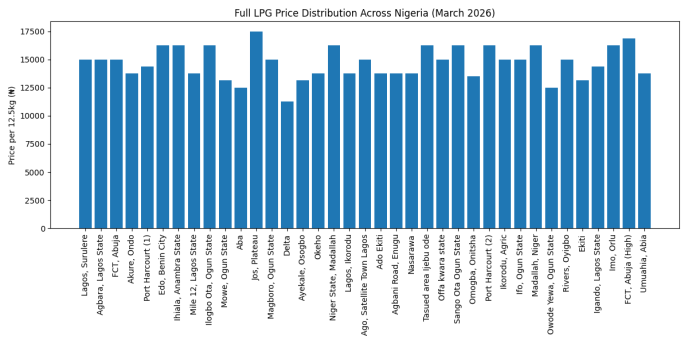
A closer look at the data shows a wide gap between the highest and lowest prices recorded in March. At the top end, consumers in Jos paid as much as ₦17,500 for a 12.5kg cylinder. On the other end of the spectrum, residents in Delta State enjoyed significantly lower prices at ₦11,250. This difference of over ₦6,000 highlights a fragmented market where location plays a major role in determining how much consumers pay for the same essential product. Most locations fall within a typical price band of ₦13,125 to ₦16,250, yet even within this range, disparities remain evident.
The geographical spread of LPG prices across Nigeria tells a deeper story about access and infrastructure. In high-cost areas such as Abuja, Benin City, and Orlu, prices consistently exceed ₦16,000. These locations are largely inland, far from the coastal entry points where LPG is imported or processed. The added cost of transporting gas over long distances inevitably pushes prices higher for end users. Meanwhile, urban centers like Lagos and Port Harcourt occupy the middle ground. Prices here typically range between ₦13,750 and ₦15,500, benefiting from relatively better infrastructure and closer proximity to supply hubs. These cities act as stabilizing forces within the national market, where competition among suppliers helps keep prices from rising too sharply. At the lower end, locations such as Aba and parts of Ogun and Osun states show that affordability is possible under the right conditions. In many cases, these areas either benefit from local supply advantages or more competitive retail environments.
The national average price of ₦14,689 sits almost exactly in the middle of Nigeria’s LPG pricing spectrum. However, this figure masks the real experience of many Nigerians. For households in high-cost regions, the average feels understated. For those in lower-cost areas, it may seem inflated. What this average truly represents is a balancing point between accessibility and strain. It signals that while LPG remains within reach for some, it is gradually becoming less affordable for many others.
Another important pattern that emerges from the data is inconsistency within the same locations. In Abuja, prices range from ₦15,000 to ₦16,875. Similarly, Port Harcourt shows fluctuations between ₦14,375 and ₦16,250. These variations suggest that the LPG market is not only influenced by geography but also by retailer pricing strategies, supply availability, and operational costs. Consumers in the same city may end up paying significantly different prices depending on where and when they buy.
Among all regions, Lagos stands out for its relative price stability. With prices mostly ranging between ₦13,750 and ₦15,000, Lagos demonstrates what a more efficient LPG ecosystem can look like. This stability can be attributed to several factors. The city’s proximity to import terminals reduces transportation costs. A dense network of distributors ensures consistent supply. High competition among retailers also prevents excessive price hikes. Lagos offers a glimpse into what the national LPG market could achieve with the right investments and policies.
In smaller towns such as Ijebu Ode and Owode Yewa, pricing trends are less predictable. Some areas experience higher costs due to limited access and poor distribution networks. Others benefit from localized competition that drives prices down. This dual reality highlights the uneven nature of LPG penetration across Nigeria. It also underscores the importance of expanding infrastructure beyond major urban centers. The implications of rising LPG prices are far-reaching. For households, an average price close to ₦15,000 represents a significant portion of monthly income, especially for low-income earners. As prices climb, the risk increases that families will revert to cheaper but less environmentally friendly fuels such as firewood and charcoal. Small businesses are equally affected. Food vendors, bakeries, and laundry operators depend heavily on LPG for daily operations. Increased fuel costs reduce profit margins and often force price increases that are passed on to consumers.
Several key factors continue to shape LPG pricing in Nigeria. Transportation remains a major cost driver, particularly for inland regions. Supply chain inefficiencies create inconsistencies that affect availability and pricing. Infrastructure limitations, including insufficient storage and bottling facilities, further complicate distribution. At the same time, market competition plays a positive role where it exists. Areas with more suppliers tend to experience more stable and competitive pricing, reinforcing the importance of expanding access to new entrants in the market.
Despite the challenges, the LPG sector in Nigeria presents strong opportunities for growth and innovation. Expanding distribution networks into underserved areas could significantly reduce regional disparities. Investments in storage and bottling infrastructure would improve supply consistency. There is also growing potential for LPG-powered innovations, particularly in sectors like laundry and small-scale manufacturing. Digital platforms can play a transformative role by improving price transparency and connecting consumers with suppliers more efficiently.
The March 2026 LPG market tells a story of both pressure and possibility. The national average price of ₦14,689 highlights a system that is functional but strained. Beneath this average lies a complex landscape of regional inequalities, logistical challenges, and untapped opportunities. For Nigeria to fully realize the benefits of LPG as a clean and sustainable energy source, targeted investments and policy support will be essential. Improving infrastructure, enhancing supply chains, and promoting market transparency can help stabilize prices and expand access. The path forward is clear. The question is how quickly the market can evolve to meet the growing demand for affordable and reliable energy.
Our Data is derived from respondents across social media and followers.
Share on Social Media:
Are you setting up, or do you need LPG information? Get started with our LPG and CNG Webinars!
Do you need LPG Depot Prices and Mont Belvieu Prices Data Sheet (2019 till date)? Get Access here!
You May Also Like


0 Comment.